
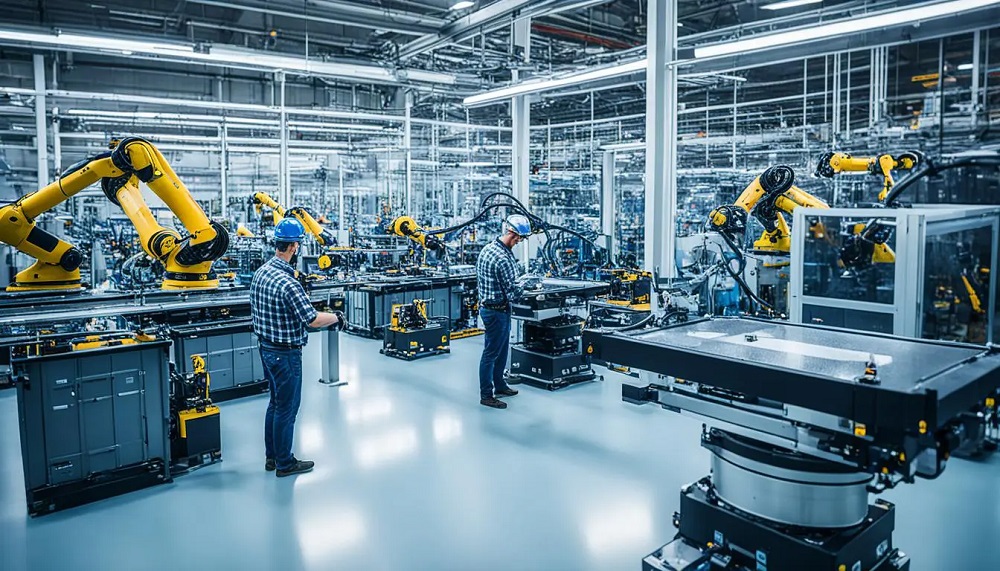
The conceptual phase of artificial intelligence has drawn to a close, giving way to an era of widespread industrial execution. Artificial intelligence is no longer a localized tool confined to experimental software labs or niche data science teams. Instead, it has matured into a foundational general-purpose technology, altering the global economic landscape in a manner reminiscent of electricity or the internet. By processing massive datasets, identifying highly subtle patterns, and automating intricate decision-making sequences, advanced computing algorithms are introducing unprecedented levels of efficiency and structural transformation across vastly different sectors at the exact same time.
This simultaneous paradigm shift is fundamentally redefining how businesses create value, manage risk, and interact with consumers. From cross-continental logistics pipelines to individual patient treatment plans, machine learning models are actively dismantling legacy workflows and creating entirely new competitive baselines.
Precision Medicine and Diagnostic Enhancements in Healthcare
The integration of artificial intelligence within the healthcare space represents a profound shift toward predictive, highly personalized patient care. Medical professionals are leveraging advanced computing architectures to overcome long-standing limitations in human data processing capacity.
Accelerated Diagnostic Imaging Analysis
Radiology and oncology are experiencing rapid improvements due to computer vision software. Deep learning neural networks are trained on millions of historical medical images to identify structural anomalies, such as micro-calcifications or early-stage pulmonary nodules, with remarkable precision. These systems scan diagnostic files in seconds, flagging subtle tissues that might be overlooked by a fatigued physician, thereby accelerating the initiation of critical therapeutic interventions.
Genomic Mapping and Tailored Drug Discovery
Traditional drug discovery is an incredibly slow process that often requires a decade of clinical trials and billions of dollars in speculative research. Machine learning models compress this timeline by simulating molecular interactions at a scale and speed that is humanly impossible. By analyzing complex genomic datasets, predictive software can forecast how specific chemical compounds will react with targeted proteins, allowing researchers to design customized pharmaceuticals tailored to the genetic profiles of specific demographics.
Supply Chain Modernization and Intelligent Automation in Logistics
Global supply chains are inherently volatile ecosystems vulnerable to geopolitical shifts, weather anomalies, and sudden consumer demand swings. Artificial intelligence serves as a stabilizing mechanism by injecting predictive clarity into these chaotic global networks.
Predictive Inventory Optimization
Legacy retail systems rely heavily on historical sales data to forecast future inventory requirements, an approach that frequently results in either costly stockouts or bloated warehouse overhead. Modern predictive algorithms analyze real-time external variables, including regional weather patterns, macroeconomic indicators, localized social media trends, and upcoming community events. This comprehensive data analysis allows retailers to position inventory across distribution networks precisely ahead of demand surges, drastically minimizing storage costs and operational waste.
Autonomous Fleet Allocation and Dynamic Routing
Logistics enterprises are deploying advanced scheduling platforms to optimize transit operations across land, sea, and air. Machine learning engines monitor live traffic infrastructure, port congestion levels, and fuel consumption metrics to adjust delivery routes on the fly. When combined with predictive maintenance models that flag equipment component wear before a mechanical breakdown occurs, fleet operators can keep vehicles operational for longer intervals while lowering transport emissions.
Advanced Risk Assessment and Algorithmic Security in Finance
The financial sector runs entirely on data processing, making it an ideal environment for advanced algorithmic deployment. Financial institutions utilize machine learning to protect assets, verify identities, and optimize market positioning.
Real Time Fraud Mitigation
Traditional rule-based fraud detection systems trigger alerts based on rigid, pre-defined parameters, often resulting in high volumes of false positives that frustrate legitimate banking clients. Modern transactional security relies on behavioral analytics. Artificial intelligence tracks micro-behaviors, such as typing speed, typical geographical coordinates, device signatures, and precise spending velocities. When an anomalous transaction occurs, the system evaluates the risk profile in milliseconds, blocking fraudulent attempts instantly while keeping legitimate commerce moving smoothly.
Portfolio Optimization and Algorithmic Trading
Investment firms utilize predictive modeling to navigate highly volatile capital markets. Quantitative algorithms ingest vast volumes of unstructured data, including global financial news feeds, corporate earnings statements, and regulatory filings, to execute trades at sub-second speeds. These models uncover hidden market correlations and rebalance complex asset portfolios automatically based on the risk tolerance parameters defined by fund managers.
Hyper Personalization and Conversational Commerce in Retail
Modern retail has evolved beyond mass marketing campaigns. E-commerce platforms and physical storefronts alike are utilizing predictive systems to cultivate individualized consumer experiences that maximize lifetime buyer value.
-
Dynamic Predictive Pricing: Retailers deploy automated pricing engines that adjust merchandise costs continuously based on competitor stock levels, real-time demand curves, and historical individual purchasing behavior.
-
Contextual Recommendation Systems: E-commerce storefronts analyze micro-interactions, such as cursor hover durations, specific search sequences, and past returns, to curate highly personalized digital storefronts for every visitor.
-
Conversational Virtual Assistants: Advanced natural language processors handle complex customer service inquiries, resolving returns, tracking shipments, and suggesting complementary items without requiring human agent intervention.
Smart Agriculture and Precision Crop Management
Farming operations are facing mounting pressure from changing climates, groundwater depletion, and expanding global populations. Agritech companies are turning to artificial intelligence to maximize crop yields while minimizing environmental impacts.
Computer Vision for Crop Diagnostics
Autonomous drones equipped with multispectral cameras fly over thousands of acres of farmland, gathering high-resolution imagery. Computer vision models process these visual feeds to detect early signs of pest infestations, localized nutrient deficiencies, or fungal outbreaks long before the symptoms become visible to a human eye from the ground. This allows farmers to apply fertilizers or pesticides precisely to infected plants rather than blanket-spraying entire fields, significantly reducing chemical costs and run-off pollution.
Automated Resource Allocation
Smart irrigation systems integrate ground-level soil moisture sensors with regional meteorological forecasts. Machine learning models analyze this data to calculate the exact volume of water a specific crop zone requires at any given hour. This level of precision agriculture conserves vital water reserves while protecting crops from over-saturation, ensuring optimal growth cycles and predictable harvest volumes.
Predictive Maintenance and Quality Control in Manufacturing
Industrial production lines require high levels of synchronization, where a failure in a single mechanical component can stall an entire factory floor, leading to extensive financial losses.
Sensory Predictive Upkeep
Industrial facilities embed acoustic, thermal, and vibration sensors directly into heavy machinery. Artificial intelligence models analyze these continuous telemetry streams to map out the baseline acoustic and vibrational signature of a perfectly functioning machine. The moment an internal bearing begins to wear down or a seal loosens, the algorithm detects the micro-deviation and automatically schedules a maintenance window, allowing technicians to replace the failing component before catastrophic mechanical damage occurs.
Automated Visual Inspection
Manual product inspection is highly susceptible to human error caused by eye fatigue or distraction. Automated assembly lines utilize high-speed cameras coupled with deep learning classification models to inspect manufactured components in real time. These systems evaluate products moving at high velocities, identifying microscopic surface fractures, dimensional deviations, or missing fasteners, instantly ejecting defective items from the production stream to maintain strict quality control standards.
Summary of Cross Industry AI Impact
The operational changes brought about by advanced computing models across various economic sectors can be categorized by their core application and primary business outcomes.
Frequently Asked Questions
How does artificial intelligence directly lower the carbon footprint of heavy industrial operations?
Artificial intelligence minimizes industrial emissions by optimizing resource utilization and energy consumption patterns. In manufacturing facilities and heavy data centers, machine learning models analyze thermal dynamics and equipment workloads to adjust cooling systems and power distribution networks in real time, eliminating energy waste. In transportation and logistics sectors, routing algorithms find the most fuel-efficient pathways, reducing vehicle idling times and total miles traveled, which cuts down greenhouse gas emissions.
What is the distinction between narrow artificial intelligence and artificial general intelligence?
Every artificial intelligence system currently deployed across modern industries is classified as narrow artificial intelligence. These systems are designed, trained, and optimized to execute a highly specific task, such as analyzing a radiological scan or forecasting supply chain demand, and they cannot apply their processing capabilities to unfamiliar domains. Artificial general intelligence remains a theoretical concept describing a software system possessing human-like cognitive flexibility, capable of learning, understanding, and executing tasks across any intellectual domain without specialized retraining.
How are regulatory bodies responding to the use of predictive models in high-stakes fields like healthcare and lending?
Governments worldwide are implementing strict compliance frameworks, such as the European Union AI Act and updated federal guidelines in the United States, to ensure safety and fairness. Regulators focus heavily on algorithmic explainability, requiring companies in healthcare, finance, and hiring to prove that their models do not harbor systemic biases or make arbitrary decisions. These frameworks demand high levels of data privacy, thorough algorithmic auditing, and mandatory human oversight for any system that directly impacts human well-being or financial status.
Can artificial intelligence models completely replace human creative professions, such as copywriting and product design?
Advanced computational models excel at generating variants of text, code, and imagery based on patterns found within their training datasets, acting as a powerful productivity multiplier for creative professionals. However, they lack genuine human empathy, lived experiences, and cultural context. The most effective deployments use artificial intelligence to handle initial brainstorming, iterative prototyping, and boilerplate drafting, while relying on human professionals to inject the strategic nuance, emotional resonance, and critical editing required for high-impact creative deliverables.
What is data poisoning, and how does it threaten corporate machine learning security?
Data poisoning is a sophisticated cyber threat where malicious actors deliberately introduce corrupted, biased, or intentionally inaccurate data into the training repository of a machine learning model. Because algorithms learn directly from their training inputs, this corrupted data compromises the system’s logic, causing it to generate faulty predictions, overlook security threats, or create intentional backdoors that hackers can exploit later. Protecting against data poisoning requires companies to implement strict data lineage tracking, continuous validation checks, and rigorous input filtering.
How do subscription-based software-as-a-service models lower the barrier to entry for small businesses wanting to use artificial intelligence?
Historically, deploying advanced computational models required massive capital investments in specialized hardware, data science teams, and server infrastructure. Cloud-based software-as-a-service providers democratize access by hosting these complex computing models on their own infrastructure and renting out the capabilities via accessible application programming interfaces. This framework allows small businesses to integrate sophisticated tools, such as predictive analytics, customer service automation, and computer vision, into their existing workflows for a predictable monthly fee without upfront capital expenditures.