
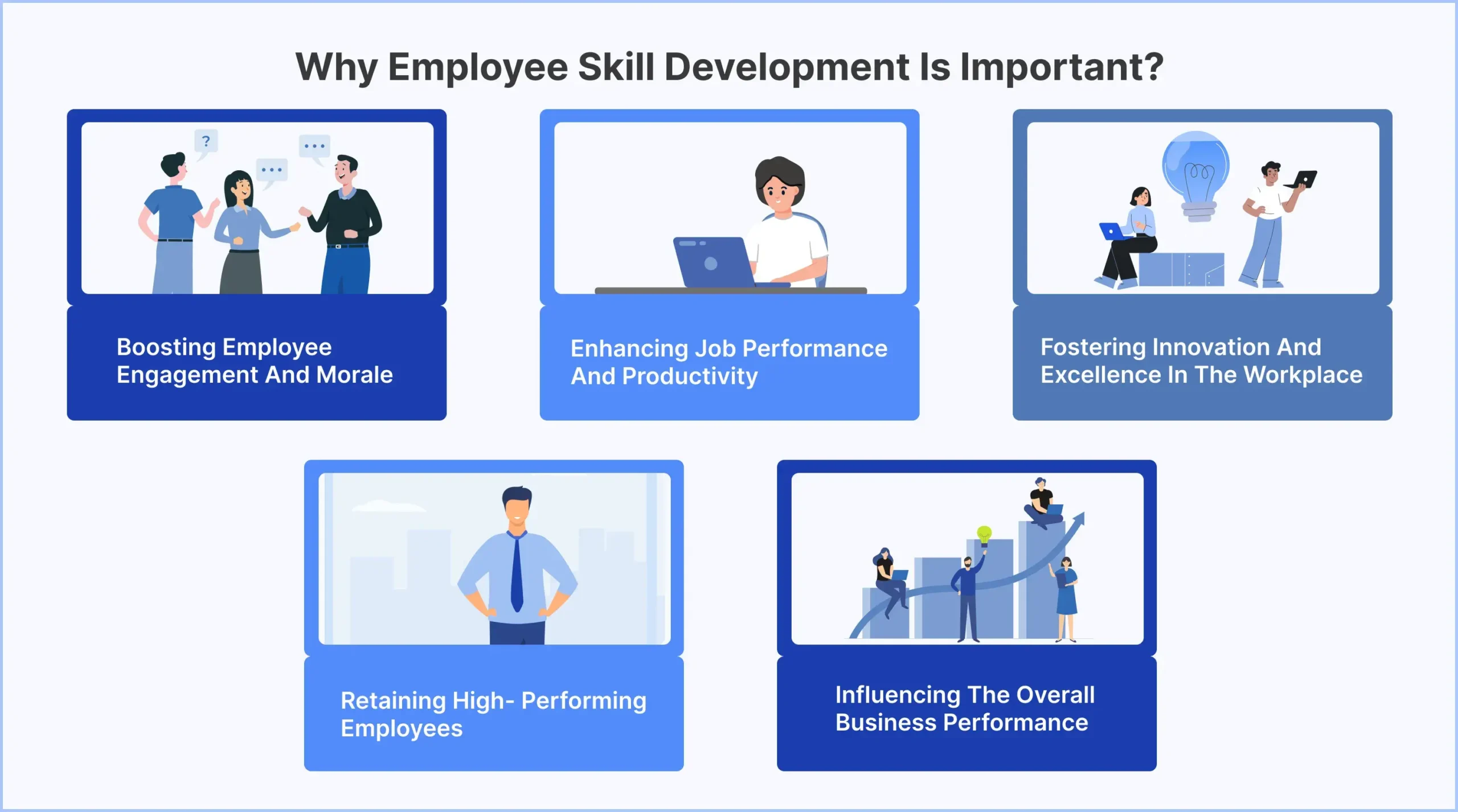
In highly competitive industries, business success depends as much on people as it does on products, technology, or strategy. Markets evolve quickly, customer expectations rise, and new tools reshape how work gets done. In this environment, workforce training is no longer optional—it has become a strategic priority for organizations that want to remain relevant and resilient.
Companies that consistently invest in employee development are better positioned to adapt, innovate, and sustain long-term performance. Training strengthens not just individual skills, but the overall capability of the organization.
The Growing Skills Gap Across Industries
Rapid technological change has widened the gap between existing employee skills and what modern roles demand. Automation, data analytics, digital platforms, and compliance standards continue to reshape job requirements.
Without structured training programs, businesses face challenges such as:
-
Slower adoption of new technologies
-
Increased errors and rework
-
Declining productivity and morale
-
Higher dependence on external hiring
Workforce training directly addresses these gaps, ensuring employees remain capable and confident as roles evolve.
Training as a Driver of Operational Efficiency
Well-trained employees perform tasks more accurately, consistently, and efficiently. Training reduces guesswork and reliance on informal knowledge sharing, which often leads to inconsistencies.
Key operational benefits include:
-
Faster task execution with fewer mistakes
-
Improved adherence to processes and standards
-
Better coordination across teams and departments
-
Reduced downtime caused by skill-related issues
When employees understand both the “how” and the “why” behind their work, daily operations become smoother and more predictable.
Supporting Innovation and Adaptability
Competitive industries reward organizations that can pivot quickly. Whether responding to market shifts, regulatory changes, or customer demands, adaptability depends on employee readiness.
Training supports innovation by:
-
Encouraging problem-solving and critical thinking
-
Exposing teams to new tools, methods, and ideas
-
Building confidence to experiment and improve processes
-
Reducing resistance to change
A trained workforce is more open to learning and less threatened by change, making transformation easier to implement.
Strengthening Employee Engagement and Retention
Employees increasingly value growth opportunities alongside compensation. When organizations invest in training, they signal long-term commitment to their workforce.
This approach leads to:
-
Higher job satisfaction and motivation
-
Stronger loyalty to the organization
-
Lower turnover and recruitment costs
-
A more positive workplace culture
Training turns jobs into careers, which is especially important in industries competing for skilled talent.
Enhancing Leadership and Succession Readiness
Workforce training is not limited to entry-level or technical roles. Leadership development is equally critical, especially in competitive sectors where decision-making speed and quality matter.
Effective training programs help:
-
Identify and prepare future leaders
-
Improve communication and people management skills
-
Ensure continuity during transitions or expansion
-
Reduce reliance on external leadership hires
Organizations with strong internal pipelines are more stable and better equipped for growth.
Maintaining Quality, Safety, and Compliance
Many competitive industries operate under strict quality and regulatory requirements. Inadequate training increases the risk of non-compliance, safety incidents, and reputational damage.
Regular training helps organizations:
-
Keep employees updated on regulations and standards
-
Reinforce safety protocols and best practices
-
Maintain consistent quality across outputs
-
Reduce legal and operational risks
Training acts as a preventive measure, protecting both the workforce and the business.
Building a Future-Ready Organization
Industries will continue to change, but organizations with a strong learning culture remain prepared. Workforce training creates a foundation for continuous improvement rather than reactive problem-solving.
Key elements of effective training strategies include:
-
Ongoing skill assessments
-
Role-specific and cross-functional learning
-
Blended formats such as digital, on-the-job, and peer learning
-
Clear alignment between training goals and business objectives
By embedding training into everyday operations, companies ensure long-term competitiveness rather than short-term fixes.
FAQ
1. How often should workforce training programs be updated?
Training programs should be reviewed regularly, especially when technology, regulations, or business priorities change.
2. Is workforce training only important for large organizations?
No. Small and mid-sized businesses benefit equally by building skills internally instead of relying heavily on external hiring.
3. How does training impact employee performance directly?
Training improves accuracy, confidence, and efficiency, leading to better individual and team performance.
4. What types of training are most valuable in competitive industries?
Technical skills, digital literacy, problem-solving, communication, and leadership development are commonly essential.
5. Can training reduce employee turnover?
Yes. Employees are more likely to stay when they see clear opportunities for growth and skill development.
6. How does workforce training support long-term business growth?
It builds internal capabilities, prepares future leaders, and allows organizations to adapt without constant restructuring.
7. What role does management play in successful training programs?
Leadership support ensures training is prioritized, applied in daily work, and aligned with business goals.